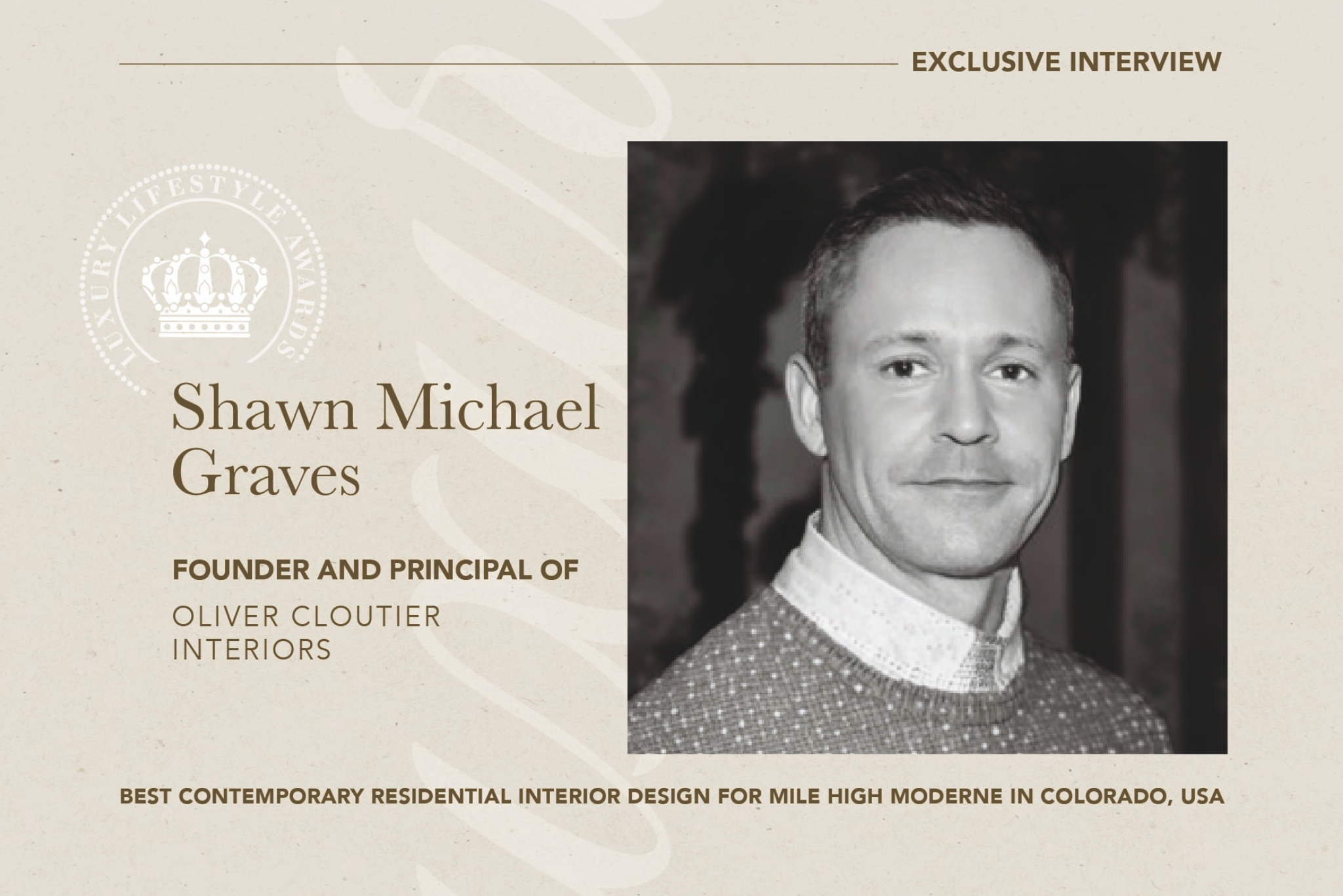
Shawn Michael Graves, Principal and Owner of Oliver Cloutier Interiors, leads a residential interior architecture studio recognized by Luxury Lifestyle Awards for Best Contemporary Residential Interior Design for Mile High Moderne in Colorado, USA. In conversation with Alexander Chetchikov, President of the World Luxury Chamber of Commerce, he shares insights into his approach to interior architecture, client collaboration, and the evolving expectations within high-end residential design.
Alexander Chetchikov: Shawn, how do you define the role of interior architecture in shaping contemporary residential environments?
Shawn Michael Graves: Interior architecture establishes the underlying order of a home — the proportions, the flow, and the way space is ultimately experienced. It’s the discipline that shapes how a residence feels before anything decorative is introduced. In contemporary design, its role has become even more essential, creating environments that feel intentional, composed, and quietly sophisticated. When the architecture is resolved at that level, everything that follows simply reinforces it.
AC: Your work emphasizes shaping space before decoration. How does this philosophy influence the way each project begins?
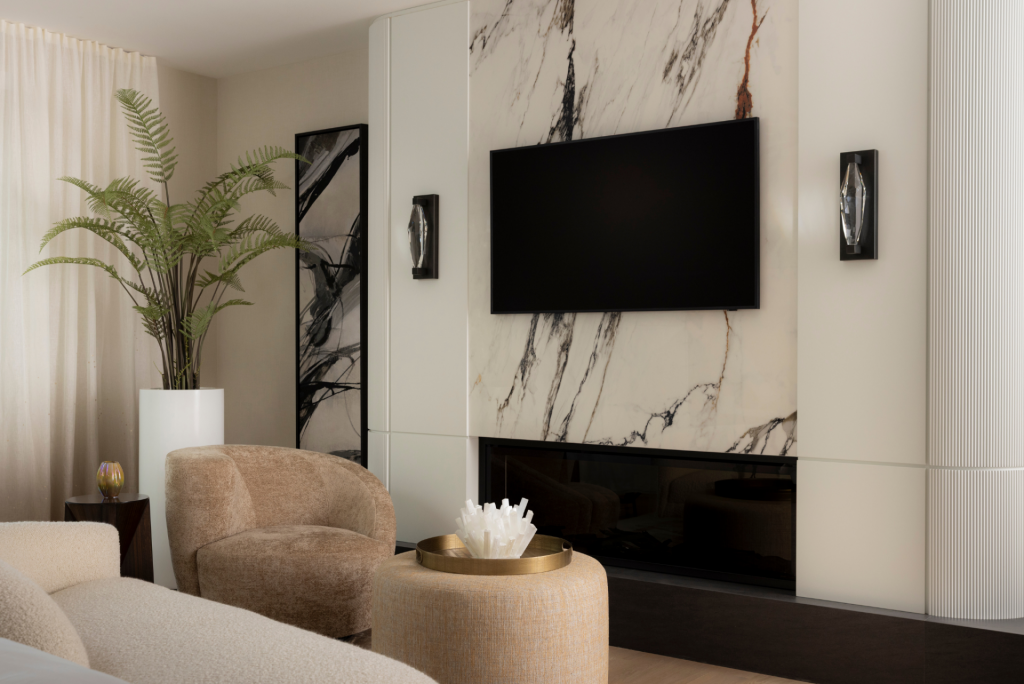
SMG: We always begin by refining the architecture of the interior — how spaces connect, how they function, and how they unfold as you move through them. That foundation allows us to approach materials and finishes with a sense of restraint and clarity. Rather than layering on design, we’re editing toward something more distilled. It creates a calm, cohesive environment where every element feels considered rather than added.
AC: Oliver Cloutier Interiors operates with a highly hands-on approach. How does this level of involvement impact project outcomes?
SMG: That level of involvement ensures continuity. From early concepts through construction and final detailing, the intent remains intact because it’s being guided consistently. In residential work at this level, it’s often the smallest decisions that define the outcome. Staying closely engaged allows us to refine those moments so the finished space feels precise and purposeful.
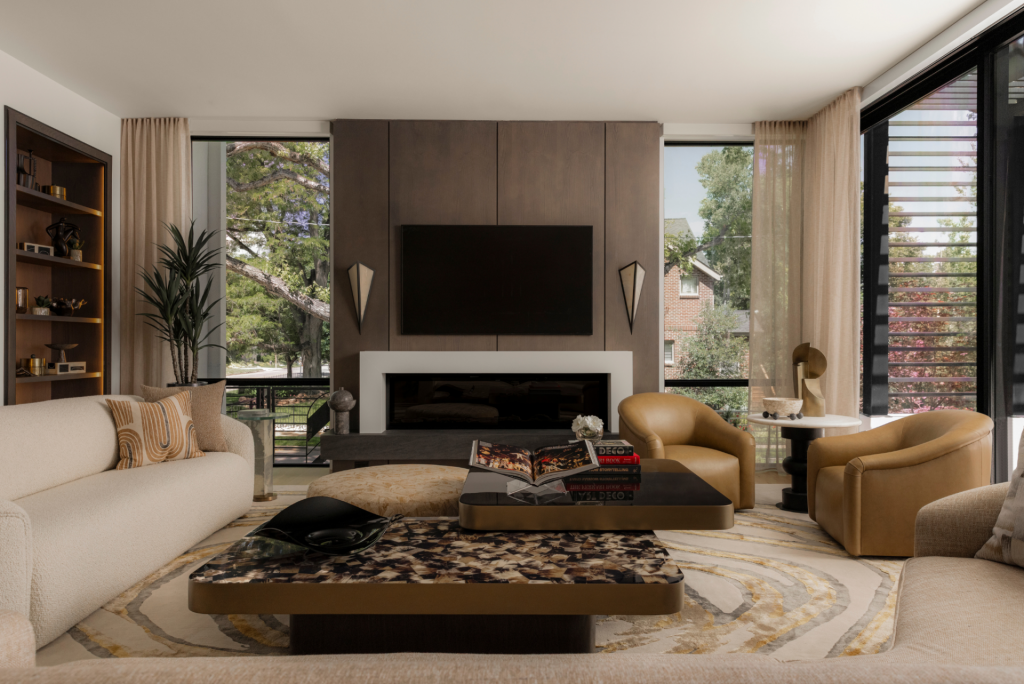
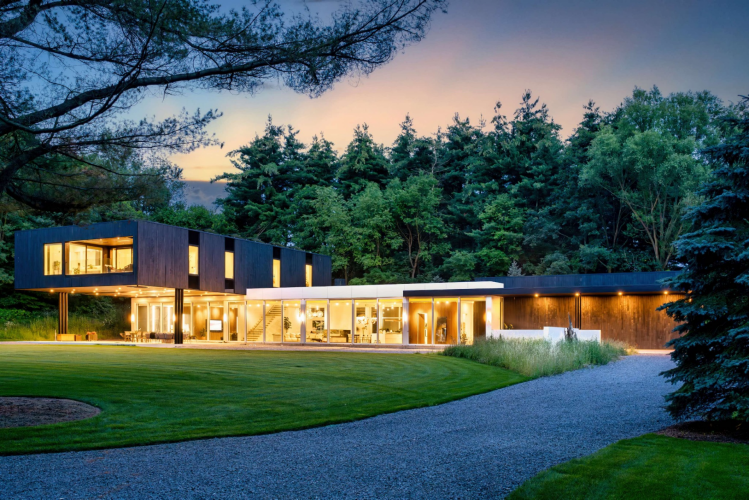
AC: The Mile High Moderne project evolved from a speculative concept into a fully tailored residence. How did you navigate that transition while maintaining design integrity?
SMG: This is actually a perfect example of how our architectural and spatial focus delivers. Since the project was grounded in a clear architectural language from the beginning, that allowed it to evolve without losing its identity. As it became more personal, we focused on refinement —adjusting the spaces and details to align with the client’s lifestyle while preserving the overall composition. That balance between adaptability and discipline is what allowed the project to remain cohesive while becoming distinctly tailored.
AC: Your studio integrates spatial design, construction documentation, and interior detailing. How do these disciplines reinforce one another in your process?
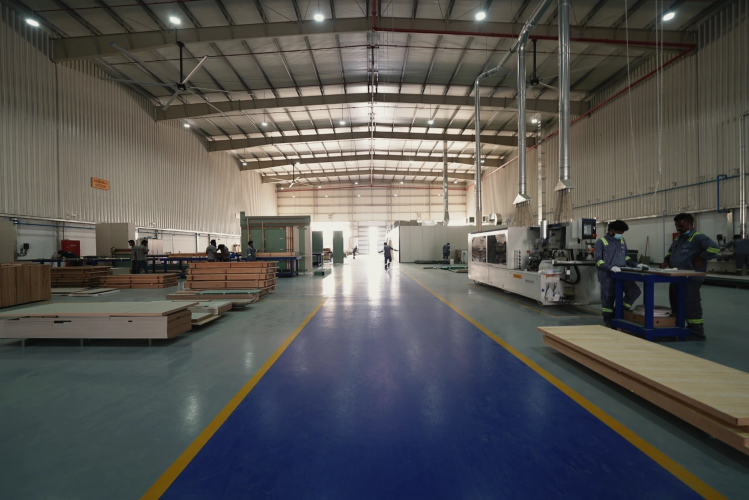
SMG: For us, they’re inseparable. The way a space is conceived, the way it’s documented, and the way it’s ultimately built are all part of the same conversation. Designing with that level of integration allows us to resolve complexities early and maintain a sense of clarity throughout the process. The result is an environment that feels not only refined, but also deeply considered in how it comes together.
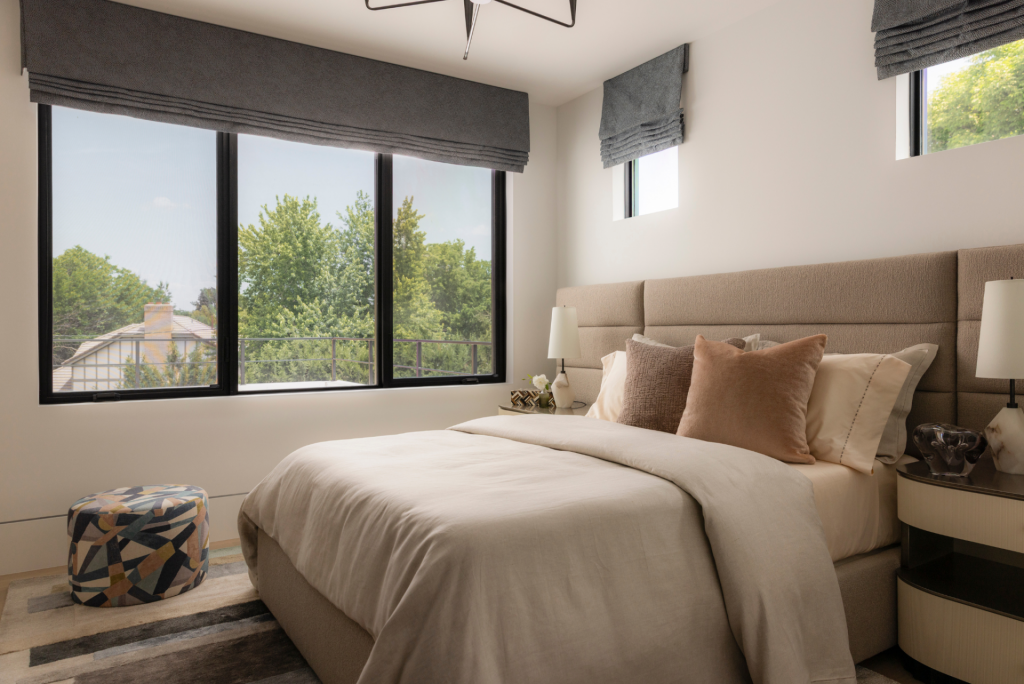
AC: Collaboration appears central to your methodology. How do you establish trust and alignment with clients throughout a project?
SMG: It begins with listening carefully and translating what clients value into something spatial and tangible. From there, it’s about maintaining a clear and consistent dialogue so they feel confident in each step forward. Over time, that builds a shared understanding — where the process feels collaborative, but also guided. That balance is what allows the work to evolve in a way that feels intimately personal.
AC: With a client base built largely on referrals and returning clients, what do you believe drives long-term relationships in this segment of the market?
SMG: It comes down to trust and consistency. Clients return when they know the experience will be thoughtful, structured, and well-executed from beginning to end. Beyond the design itself, it’s about how the process feels — measured, attentive, and reliable. That continuity naturally builds long-term relationships over time.
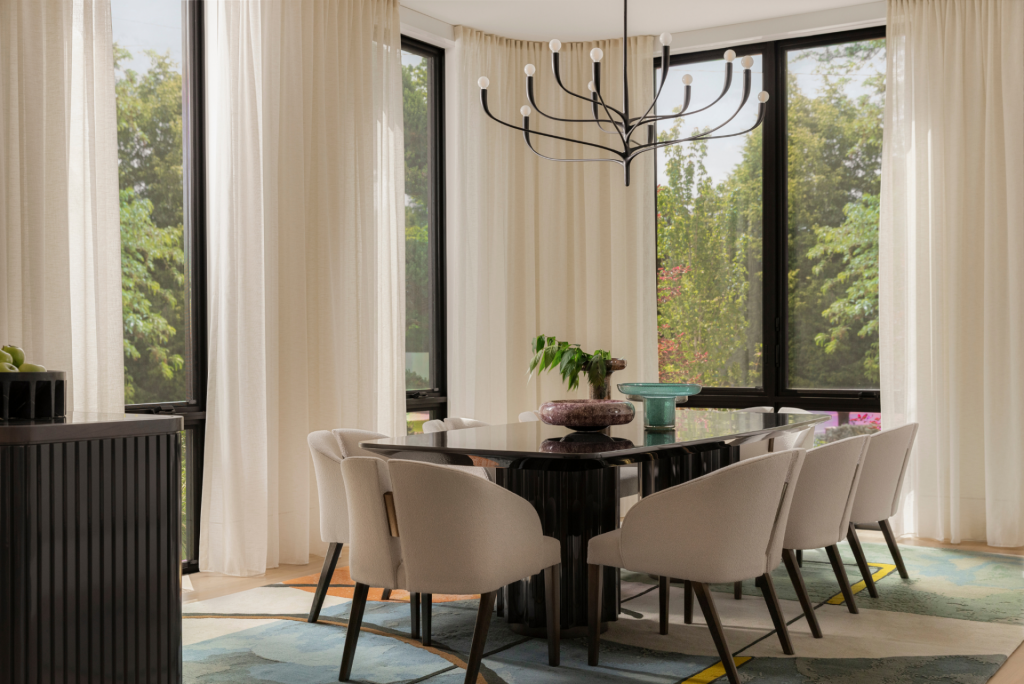
AC: How do you see expectations in luxury residential design continuing to evolve, particularly in relation to personalization and livability?
SMG: There’s a growing emphasis on homes that feel both highly tailored and effortlessly livable. Clients are seeking environments that reflect their lives in a more nuanced way — not through overt statements, but through thoughtful planning and subtle refinement. The expectation is no longer just beauty, but a sense of ease and cohesion that supports how they live every day.
Through a structured and detail-driven approach, Shawn Michael Graves positions Oliver Cloutier Interiors within a segment of residential design defined by architectural clarity, technical precision, and client-focused execution. His perspective reflects a broader shift toward interiors that balance sophistication with everyday functionality.
Discover more about Oliver Cloutier Interiors: https://www.olivercloutierinteriors.com/