Partner content
Guests rarely remember a hotel by its floor plan. They remember the atmosphere of the lobby, the tactile quality of the materials and the way every detail feels connected to the space. In luxury hospitality, a memorable interior is shaped by its architecture, furniture and the smaller elements guests encounter throughout their stay.
Bespoke accessories add the finishing layer to a hotel interior. Door hardware, lighting details, in-room fittings, custom-designed signage, dimensional lettering and carefully planned wayfinding all contribute to the overall experience. Each detail may seem modest on its own, but together they help create a cohesive interior with a distinctive character.
Why details carry so much weight
A premium interior is experienced at close range. Guests notice the texture of a surface, the proportions of a fitting, the clarity of lettering and the way materials work together. A carefully designed lobby can lose some of its visual consistency when the same attention to detail is missing from corridors, guest rooms or shared spaces.
This is why leading interior designers consider accessories early in the design process. Door numbers, room signs, switches and fittings can repeat the shapes, colours and finishes already present in the architecture. When these elements follow a shared visual language, the entire property feels more considered.
Materials that set the tone
Material is one of the defining elements of a luxury interior. Wood, acrylic glass and stainless steel offer a versatile combination of textures and finishes for contemporary hotel spaces.
Natural wood introduces warmth and an organic quality, while stainless steel adds a clean, architectural character. Acrylic glass offers opportunities for layered compositions, dimensional lettering and carefully considered colour accents. Combining these materials allows designers to create interior details that complement the furniture, wall finishes and architectural features around them.
The choice of finish also influences how an accessory interacts with its surroundings. A restrained combination of natural wood and stainless steel can suit a calm, understated interior, while layered acrylic elements can introduce colour and depth into a more expressive design scheme. The most successful combinations are those that support the overall concept without competing with it.
Personalisation that tells the hotel’s story
Bespoke design begins with the identity of the property. A custom monogram, a motif inspired by local architecture, a pattern drawn from the building’s history or a distinctive typeface can turn functional interior elements into recognisable design features.
These details are especially effective when used consistently. A visual element introduced in the lobby might reappear in corridor signage, room numbers or information signs. Repetition creates continuity, while thoughtful variations in scale and material keep the design interesting.
The result is an interior that feels connected to the hotel’s character.
Small elements, large impact
Several categories of accessories contribute to the way guests experience a hotel:
- Door hardware establishes the tactile quality of the space from the moment guests enter their rooms.
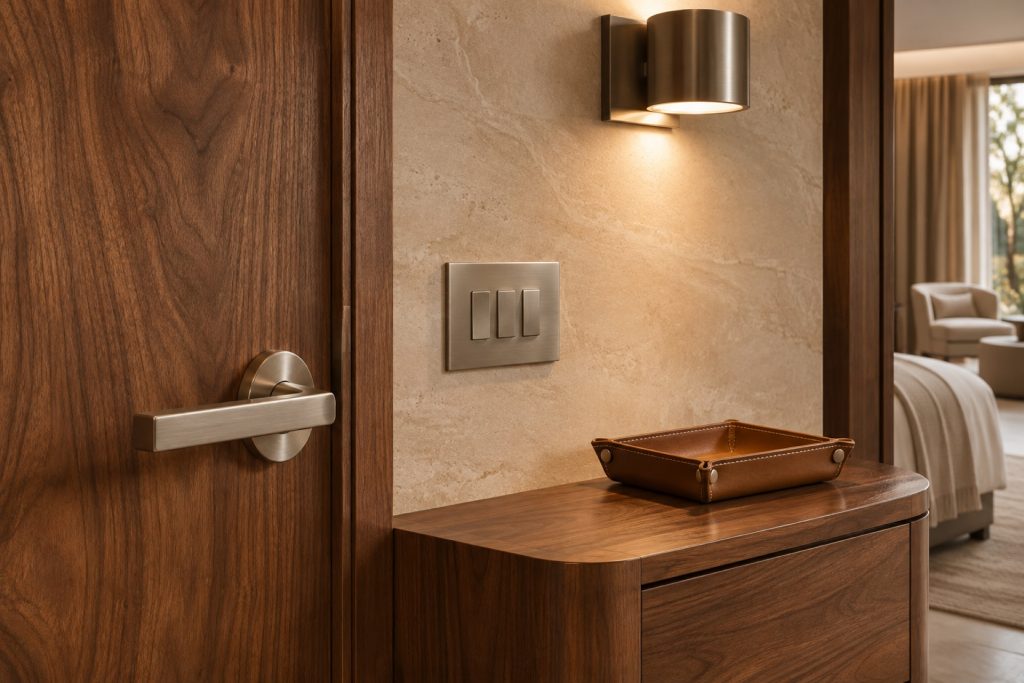
- Lighting details such as switches, wall fixtures and their surrounding finishes help maintain visual consistency throughout corridors and suites.
- In-room fittings, including hooks, trays and mirror details, contribute to the comfort and visual character of guest rooms.
- Wayfinding elements such as room numbers, directional signs and names help guests move through the building with clarity and ease.
These elements serve different purposes, but they work best when their proportions, materials and visual details belong to the same design concept.
Room numbers as a design signature
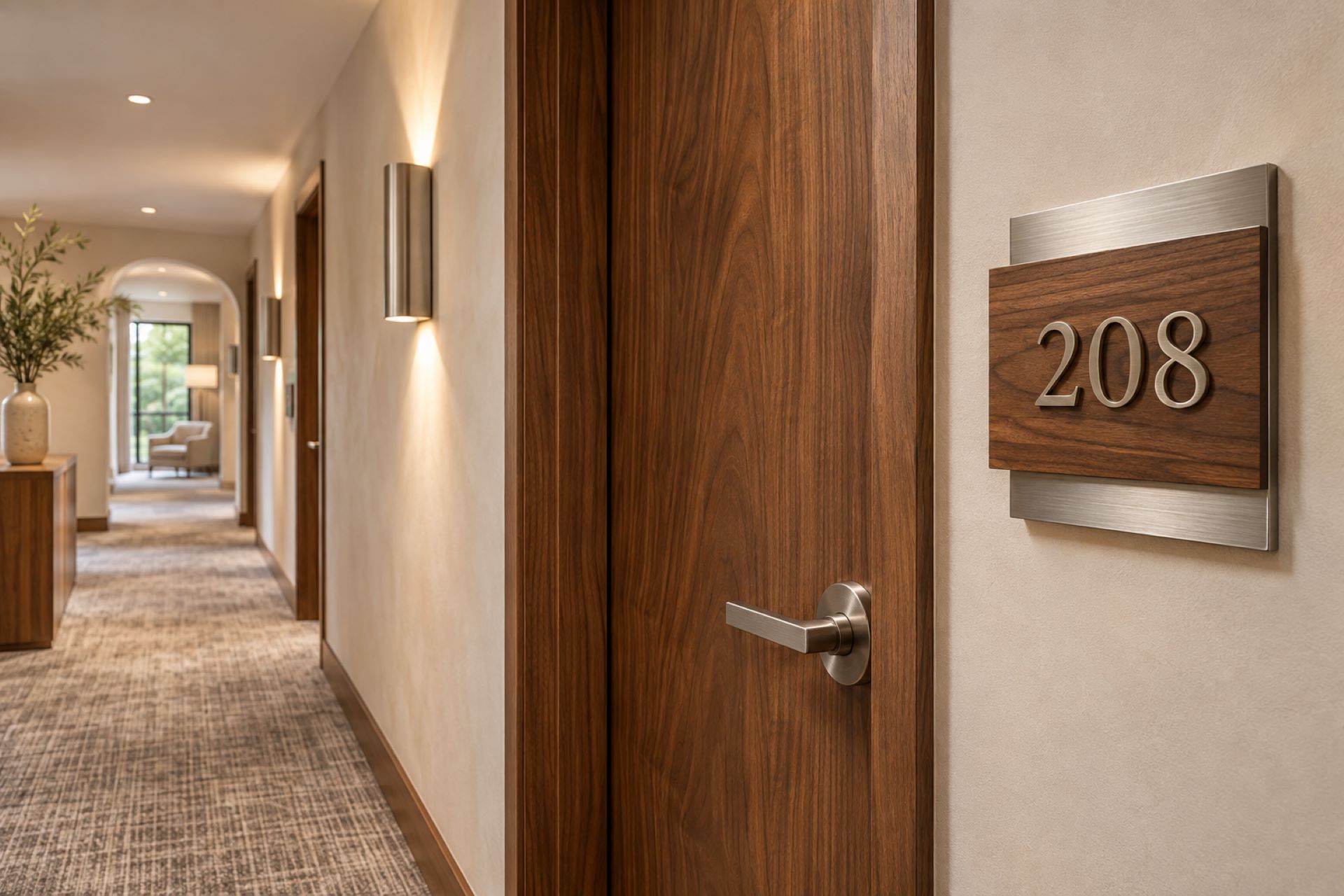
Room numbers are among the most frequently repeated details in a hotel interior. Their design appears across corridors and floors, making them an important part of the property’s visual identity. A well-considered number sign can echo the finish of door hardware, complement the wall palette and continue the typography used elsewhere in the interior, while remaining clear and easy to read.
The design of BSign can contribute to the overall interior concept. BSign offers examples of how different materials and custom lettering can complement a space, from combinations of wood and stainless steel to layered compositions with dimensional letters made from coloured acrylic.
Consistency is equally important. Repeating the same visual language across floors, from typography and proportions to material combinations, helps create a sense of continuity throughout the property. Accessibility can also be integrated into the design, with tactile Braille lettering incorporated where required.
Designing the finishing touches with confidence
A successful accessory scheme starts with the interior itself. Designers can begin by observing the existing materials, colours, lighting and architectural details in a typical corridor or guest room. These elements provide a practical foundation for choosing a palette, typography and proportions for the accessories.
Physical samples are particularly useful at this stage. Seeing a material combination on an actual door or wall makes it easier to understand how it responds to the surrounding light and textures. It also helps confirm that the proposed details work alongside the furniture, hardware and finishes already selected for the project.
The process benefits from collaboration between the owner, interior designer and operations team. The designer considers how each element relates to the overall concept, while the operations team brings practical knowledge of the property’s daily needs. Together, they can create an interior that balances visual consistency with long-term functionality.
The lasting impression
A hotel’s character is expressed through the details guests encounter throughout the building. Carefully selected materials, considered proportions, custom-designed accessories and consistent wayfinding all contribute to an interior that feels complete.
Bespoke elements make it possible to carry a design concept beyond the lobby and into corridors, guest rooms and shared spaces. When each detail is created with attention to materials, craftsmanship and the character of the property, the result is an interior with a recognisable identity and a lasting sense of quality.