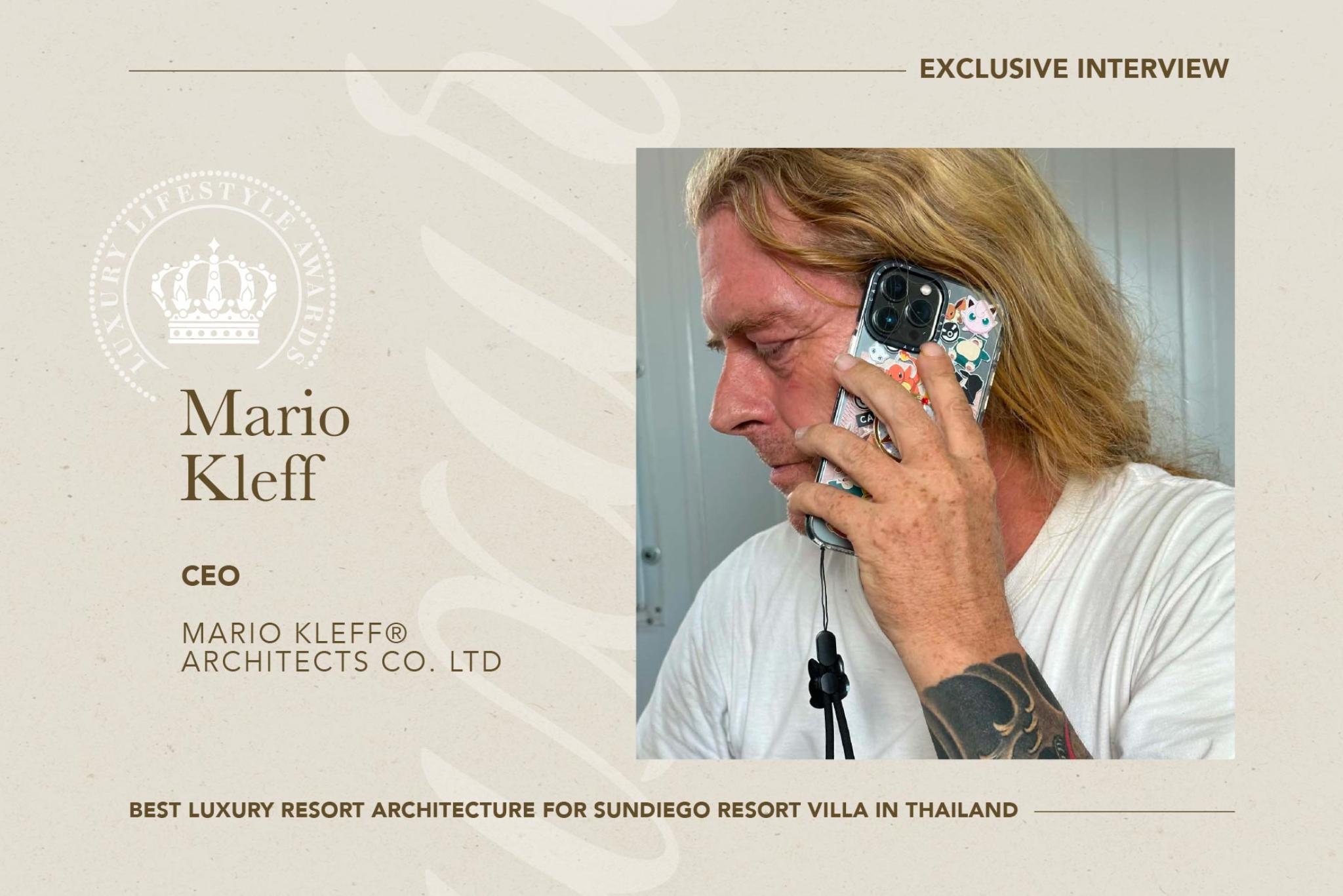
Mario Kleff, CEO of Mario Kleff® Architects Co. Ltd, is recognized by Luxury Lifestyle Awards for Best Luxury Resort Architecture for Sundiego Resort Villa in Thailand. In conversation with Alexander Chetchikov, President of World Luxury Chamber of Commerce, he reflects on architectural discipline, structural thinking, and the role of integrated design in contemporary resort development.
Alexander Chetchikov: Sundiego Resort Villa brings together private villas, boutique hospitality, and a unified resort environment. How do you define the architectural responsibility behind a project of this scale?
Mario Kleff: Architectural responsibility at this scale is essentially about coherence under complexity. You are not designing isolated buildings, but an interdependent system where circulation, structure, services, and landscape must operate as one framework. The distinction between private and collective space becomes a planning question rather than a stylistic one.
The role of the architect is to establish an order that allows these different layers to function simultaneously—technically, spatially, and economically. If that order is clear, the project remains legible and buildable even as it grows in scale.
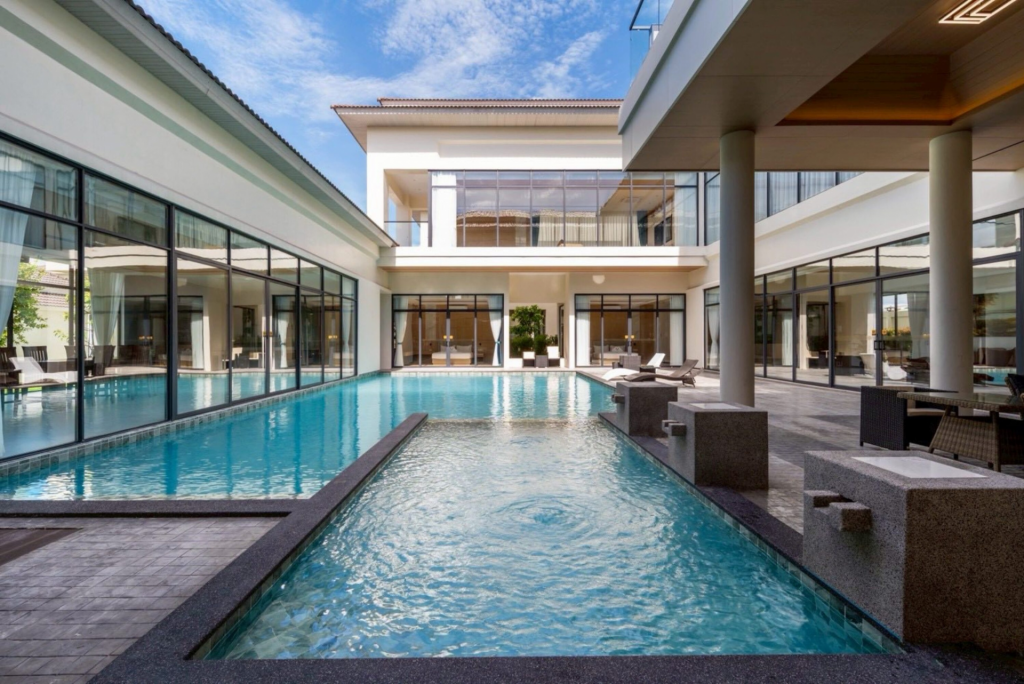
AC: Your practice is closely associated with the idea that structure is design. How does this principle shape the way you approach resort architecture?
MK: Structure defines the limits and the possibilities of space. In resort architecture, where openness, span, and climate response are central, structural decisions directly determine how architecture performs.
When structure is treated as design, it eliminates the separation between concept and construction. The geometry, proportions, and rhythm of a project emerge from load paths and material logic rather than applied form. This reduces arbitrariness and creates a certain discipline—what you see is a consequence of how the building stands.
AC: The project combines residential privacy with hospitality functions. How did you approach the balance between individual space and a coherent resort atmosphere?
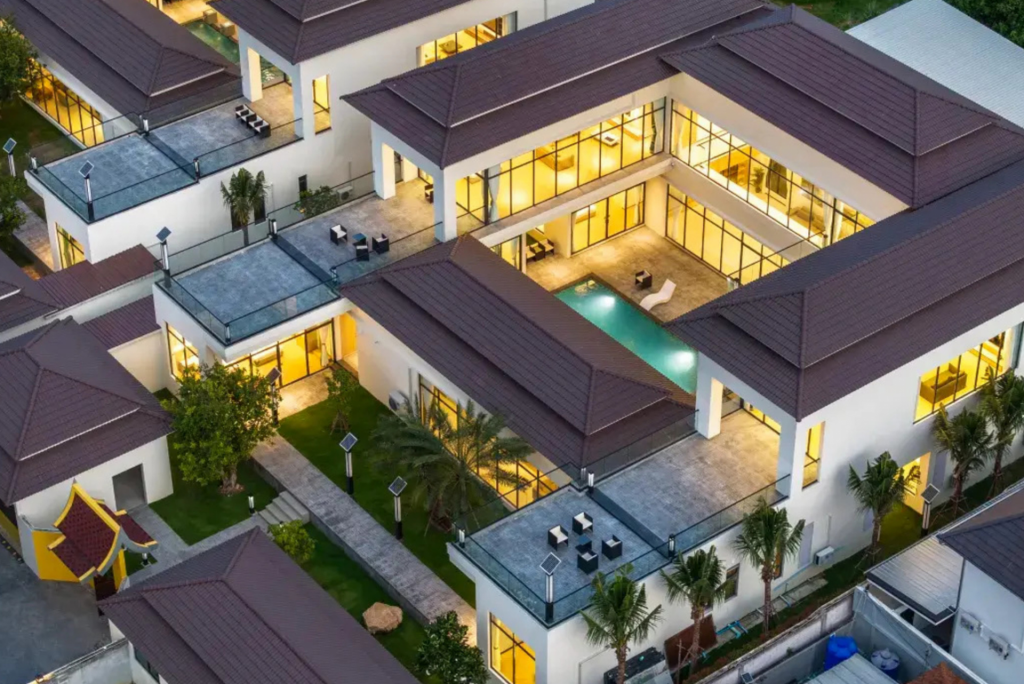
MK: The balance is achieved through hierarchy and infrastructure rather than visual uniformity. Each villa operates as an autonomous unit, with controlled access, orientation, and spatial enclosure. At the same time, the overall layout establishes a shared order—through circulation networks, landscape structure, and service systems.
Coherence comes from consistency in how things are organized and built, not from making everything look the same. The resort reads as one environment because it is planned as one system.
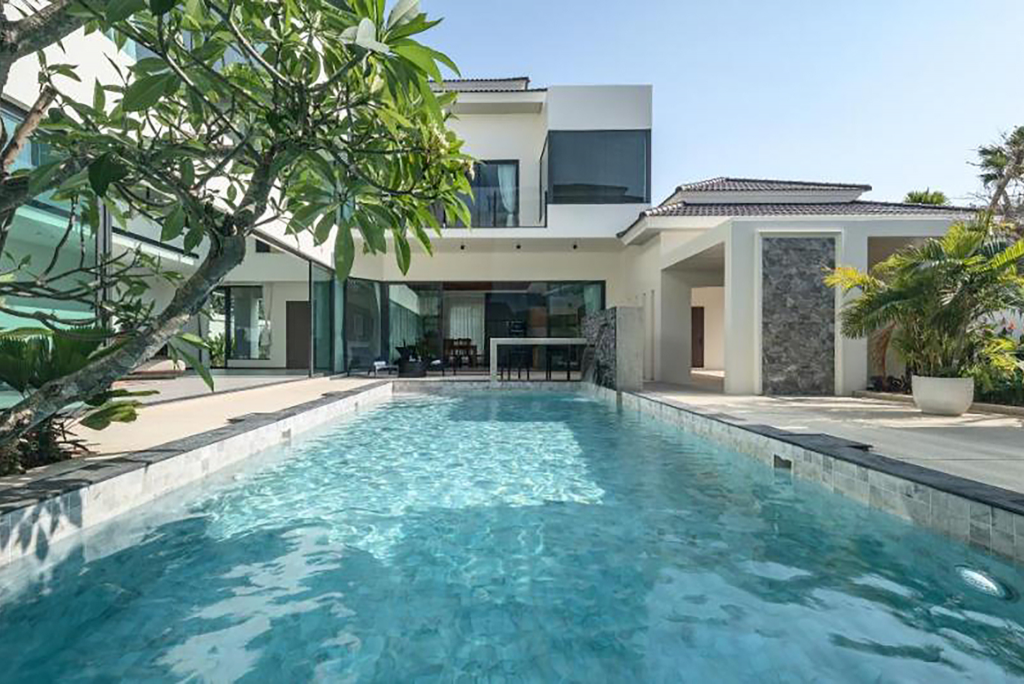
AC: Sundiego Resort Villa incorporates advanced structural solutions, including large spans and column-free spaces. What role does engineering play in creating architectural clarity?
MK: Engineering is not a secondary layer—it is the basis for clarity. Large spans and open spaces only work if the structural system is resolved precisely and early. Otherwise, compromises appear later in the process.
When engineering is integrated from the beginning, it simplifies the architecture. Fewer elements are needed, spaces remain continuous, and the construction process becomes more predictable. Clarity is often the result of eliminating structural ambiguity.
AC: The development was shaped by site conditions, budget parameters, and feasibility considerations. How do constraints contribute to a disciplined architectural process?
MK: Constraints are the framework within which architecture becomes precise. Without them, decisions tend to become arbitrary. Site conditions define orientation and placement, budget defines scale and materiality, and feasibility defines what can actually be built.
A disciplined process accepts these parameters early and works with them directly. The result is not limitation, but concentration—fewer, more deliberate decisions that can be carried through consistently.
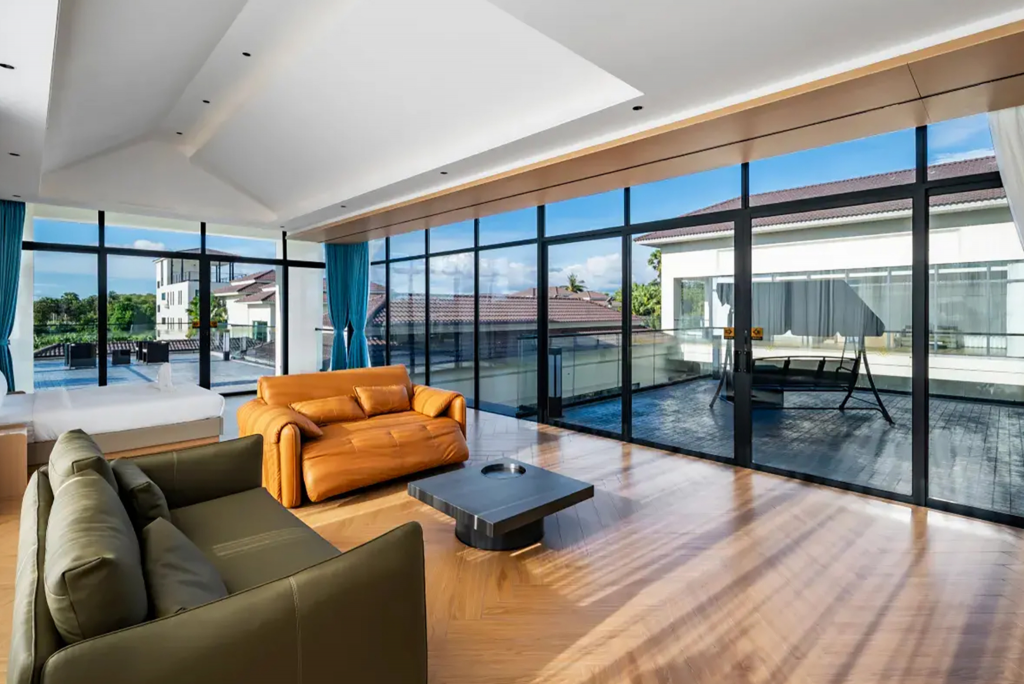
AC: Sustainability in the project includes natural light, ventilation, solar energy technology, and efficient infrastructure. How do you view sustainability within long-term architectural performance?
MK: Sustainability is ultimately measured over time. It is less about adding systems and more about reducing dependency. In a tropical context, passive strategies—shading, cross-ventilation, orientation—are fundamental and often more reliable than technical overlays.
The question is whether the building continues to perform efficiently after years of use. That depends on robustness, simplicity, and maintenance, not only on initial design intent.
AC: As an integrated design and construction project, Sundiego Resort Villa required consistency from concept through execution. What does this model require from leadership?
MK: It requires continuity of decision-making. When design and construction are separated, inconsistencies tend to emerge. An integrated approach demands that the same logic is maintained from the first concept to the final detail.
Leadership in this context is not only coordination—it is the ability to understand design, engineering, and construction as one process, and to make decisions that remain valid across all phases.
AC: Looking at the future of luxury resort architecture in Thailand and the wider region, what standards do you believe will become increasingly important?
MK: The emphasis will shift toward performance and longevity. Projects will be evaluated less by image and more by how they function over time—structurally, environmentally, and economically.
Clarity in construction, efficiency in infrastructure, and adaptability of space will become more important than formal expression alone. In that sense, architecture becomes more accountable, which is a necessary development.
Sundiego Resort Villa positions Mario Kleff’s work within a disciplined architectural framework where structure, planning, and execution are treated as connected responsibilities. The interview is relevant to the resort and hospitality sector because it examines how architectural identity can emerge through engineering logic, site response, and long-term development standards.
Discover more about Mario Kleff® Architects Co. Ltd: https://mario-kleff.com/