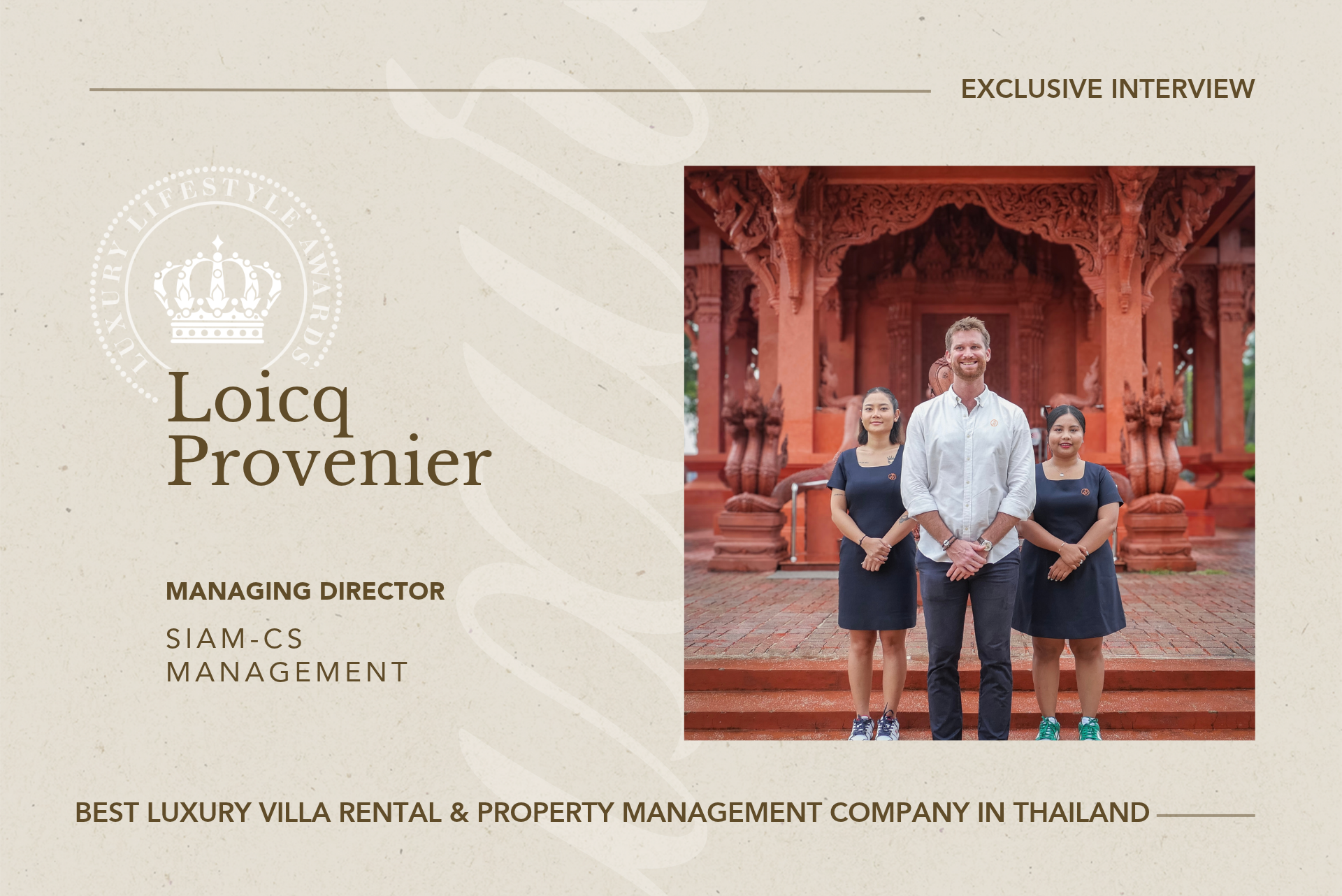
Mr. Loicq Provenier of Siam-CS Management discusses the evolving expectations of luxury property owners, the importance of professional management, and the company’s transition toward international operations. Established in Koh Samui, Thailand, Siam-CS Management oversees more than 150 villas and residences and has been recognized by Luxury Lifestyle Awards as the Best Luxury Villa Rental & Property Management Company in Thailand 2026. In conversation with Alexander Chetchikov, President of World Luxury Chamber of Commerce, Mr. Provenier reflects on the principles of consistent service, organizational development, and the strategic considerations shaping the company’s expansion into Europe.
Alexander Chetchikov: Siam-CS Management has developed from a small property management operation in Koh Samui into an established business overseeing more than 150 properties. How would you describe the leadership principles that have guided this development, and how have those principles evolved as the organization has grown?
Loicq Provenier: I would say resilience, persistence, and perhaps most importantly, the ability to learn from our mistakes.
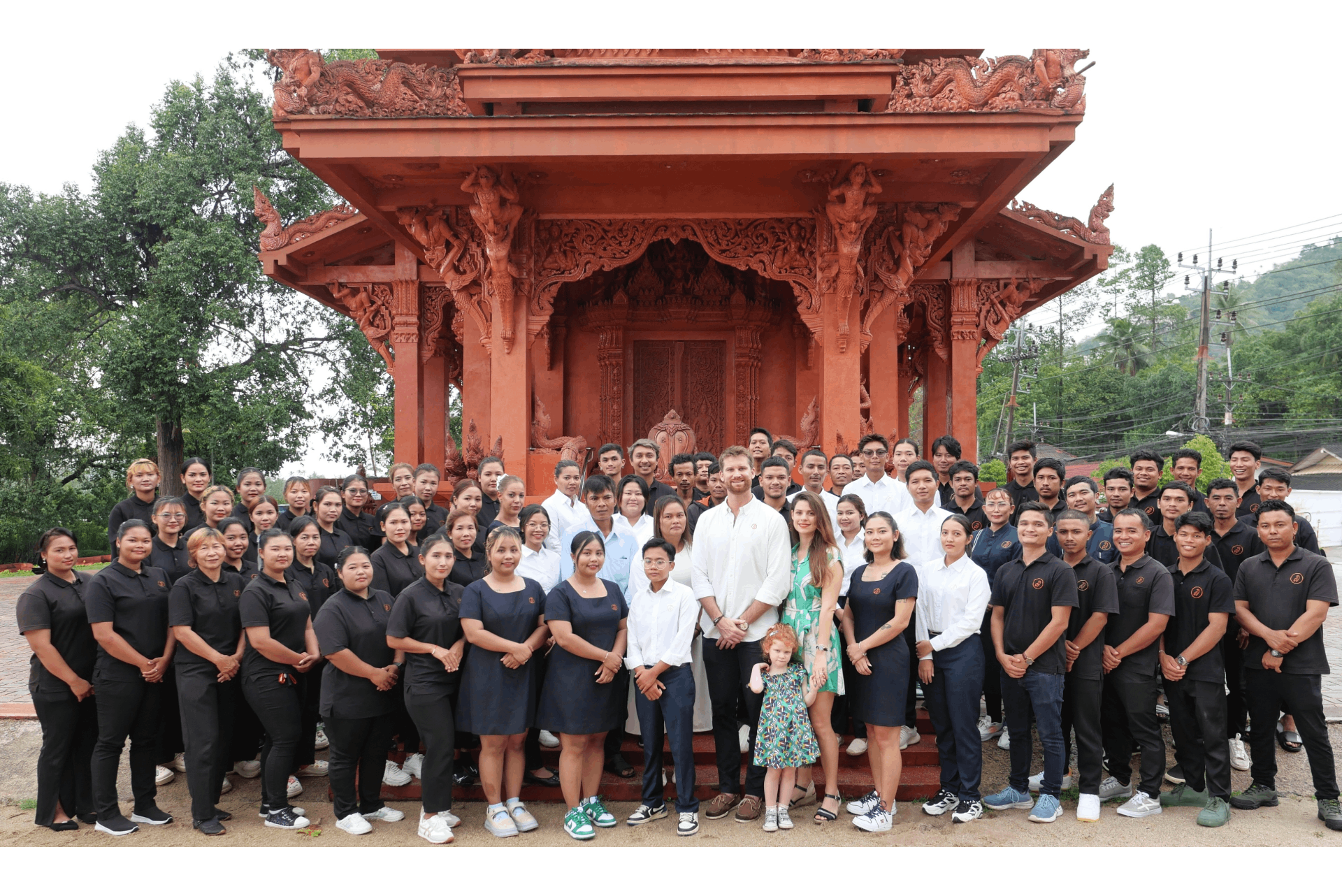
When we started in 2015, we were managing just four properties. Today, we oversee more than 150 villas and residences, with a team of over 75 people. That journey has certainly not been a straight line.
One of the most important lessons I have learned is that failures and mistakes are inevitable when building a business. What matters is how you respond to them. I believe in being tolerant of mistakes, provided we take the time to understand what went wrong, identify opportunities for improvement, and implement the necessary changes. My approach to leadership has also evolved considerably.
In the beginning, like many entrepreneurs, I believed I needed to be involved in almost everything. As the company grew, I gradually understood that successful leadership is not about having all the answers, but about surrounding yourself with people who collectively have better answers than you could find alone.
Learning how to recruit, delegate, listen, and genuinely trust skilled collaborators has been fundamental to our development.
Another important aspect is learning to trust your own judgment. After more than a decade in this industry, you begin to recognize that the challenges you have overcome have given you valuable experience and expertise. You need to acknowledge that experience while remaining humble enough to continue learning. But ultimately, none of this would have been possible without our team.
What continues to impress me is the ability of our people to assimilate our procedures, embrace our standards, and translate our vision into daily operations.
I believe one of the greatest responsibilities of leadership is understanding both individual aspirations and organizational objectives, and finding ways to align them.
When people understand that their personal development contributes to the success of the organization, and that the organization’s success creates opportunities for them, you establish the foundations for sustainable growth.
AC: Luxury property management involves balancing the expectations of international property owners with those of guests seeking a distinctive hospitality experience. How do you approach these different priorities while maintaining a consistent standard of service?
LP: For me, everything begins with communication, availability, and responsiveness.
In our industry, we are responsible for assets that often represent significant financial and emotional investments for their owners, while simultaneously providing experiences that guests may have been planning and anticipating for months. Both deserve our full attention.
I have always considered availability and responsiveness to be non-negotiable aspects of hospitality. Problems do not necessarily happen during office hours, and neither owners nor guests should feel abandoned when something unexpected occurs.
Flexibility is equally important. Every property is different, every owner has different expectations, and every guest brings a different perspective. However, professional property management also requires a certain level of authority.
Over time, we have developed considerable operational experience, and I believe part of our responsibility is to use that expertise to guide our owners, even when our recommendations may initially differ from their expectations.
We should not simply agree with everything. We should be able to explain, demonstrate, and defend what we genuinely believe is in the best interest of their property.
I also believe that excellent property management and exceptional guest satisfaction are fundamentally connected.
A property that is properly maintained, professionally prepared, and consistently supervised will naturally provide a better guest experience. Of course, luxury hospitality goes beyond operational efficiency.
It is also about the small details, personal attention, and human interactions that transform a pleasant stay into a memorable experience.
Ultimately, our responsibility is to combine professional discipline behind the scenes with genuine warmth and flexibility in our interactions with guests.
AC: The company has undergone an important organizational transformation, particularly with the strengthening of its leadership structure in 2024. What has this transition taught you about building a professional culture that can support sustainable growth?
LP: One of the biggest lessons is that you should start preparing your organization for growth long before that growth actually happens.
Like many successful small businesses, Siam-CS initially developed through a relatively informal structure, where decisions were centralized and communication was often direct and spontaneous.
This works extremely well when you have a small team. It becomes considerably more challenging when you have 75 employees, multiple departments, and more than 150 properties to manage.
In 2024, we reached an important turning point with the arrival of two key members of our leadership team: Yoon Hnin Hnin Lwin (“Aqua”), who took responsibility for our Office Department, and Dollaya Wongsing (“Conii”), who joined to lead Marketing and Business Development.
Their contribution has been instrumental in helping us transition from a family-operated business toward a more structured and professionally managed organization. This transformation has taught me the importance of controlled growth.
Growing too quickly, without the appropriate systems, procedures, and management structure, can actually weaken an organization rather than strengthen it.
I have also come to appreciate how essential communication and company culture are to implementing change. You can develop the best strategy in the world, but if your team does not understand it, believe in it, or feel involved in its implementation, that strategy will struggle to succeed.
Another lesson, perhaps a more difficult one, is that not everyone is equally comfortable with change.
As organizations evolve, responsibilities change, expectations increase, and established habits are challenged. Some people embrace those opportunities, while others find it more difficult to leave their comfort zones.
As leaders, we must support people through those transitions while remaining committed to the direction of the organization.
Ultimately, sustainable growth depends on finding the right balance between ambition, organizational discipline, and the development of the people who make that ambition possible.
AC: Siam-CS Management has been recognized by Luxury Lifestyle Awards as the Best Luxury Villa Rental & Property Management Company in Thailand 2026. How do you interpret this recognition in the context of the company’s development and its responsibility to maintain professional standards?
LP: First of all, I see this award as recognition of more than a decade of hard work, persistence, and collective commitment.
When you start with four properties and gradually build an organization managing more than 150, there are countless challenges, difficult decisions, and moments when you have to question your methods and adapt.
Receiving this recognition is therefore extremely rewarding, not only for me personally, but for everyone who has contributed to Siam-CS over the years.
I also believe consistency is one of the most important measures of success in our industry. Since 2015, we have welcomed thousands of guests and accumulated thousands of reviews across major international booking platforms. Maintaining strong guest satisfaction across such a significant volume of operations requires continuous effort from every department.
Our results are not the consequence of one exceptional property or one successful season. They reflect years of operational experience, continuous improvements, and the collective efforts of our teams.
However, I do not see this award as a destination. Recognition creates responsibility.
It confirms that we have developed something valuable, but it also raises expectations and challenges us to continue improving.
The hospitality industry evolves constantly, and what was considered exceptional five years ago may simply be expected today.
For us, this award reinforces our determination to invest in our people, improve our operational systems, embrace innovation, and maintain the highest possible standards.
I am extremely proud of what we have achieved, but I am equally aware that our next challenge is to demonstrate that we deserve this recognition every single day.

AC: As expectations within the luxury villa rental sector continue to evolve, what changes do you consider most significant for the future of professional property management?
LP: Without hesitation, I would say technology and artificial intelligence.
I believe we are approaching a period of profound transformation in the hospitality industry, and property management will certainly not be an exception.
Artificial intelligence, automation, and increasingly sophisticated management systems will fundamentally change how we organize our operations, communicate with guests, monitor properties, and allocate resources.
We may even reach a point where robotics becomes part of everyday hospitality operations, particularly for repetitive or physically demanding tasks.
For a company like Siam-CS, managing a large portfolio of individual properties, these developments represent enormous opportunities.
Technology can help us improve efficiency, reduce human error, anticipate maintenance requirements, and provide property owners with greater transparency and visibility over their investments.
However, I also see a potential contradiction.
The more technology allows us to automate hospitality, the more important it becomes to preserve the human dimension of the experience.
Luxury hospitality is not simply about efficiency. It is about attention, emotion, personal relationships, and making people feel genuinely welcome. I would be concerned about an industry where technological progress gradually distances hospitality professionals from the people they are supposed to serve.
Our challenge will therefore be to find the right balance. I want technology to make our teams more efficient, better informed, and more capable of delivering exceptional service, rather than simply replacing human interactions.
I believe the most successful hospitality companies of the future will be those capable of combining technological sophistication with authentic human warmth.
AC: With European expansion underway and Belgium identified as the initial gateway, how are you approaching the challenge of transferring a business model developed in Thailand into markets with different regulatory and cultural expectations?
LP: I think the first thing to recognize is that international expansion is not simply about reproducing a successful business model in another country.
What works in Thailand will not necessarily work in Belgium, France, Italy, or Spain.
Every market has its own regulatory framework, cultural expectations, employment practices, operational costs, and competitive environment.
We have spent more than a decade developing our expertise in Thailand, but it would be a mistake to assume that this automatically makes us experts in European markets.
Our approach is therefore based on combining the experience we have accumulated with a willingness to learn and adapt.
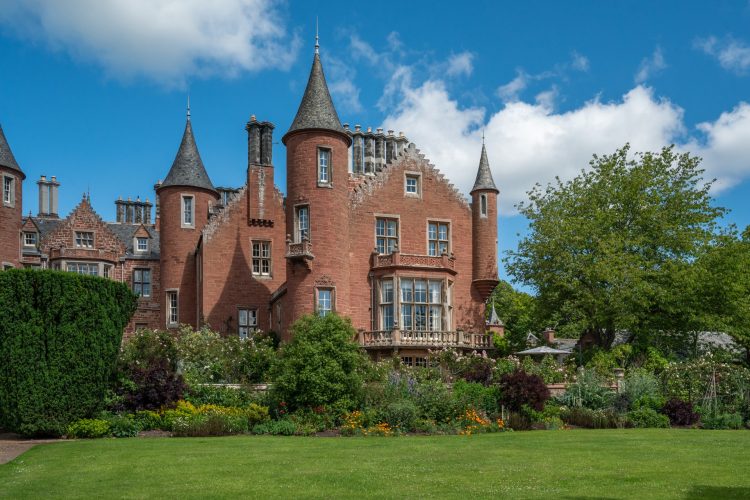
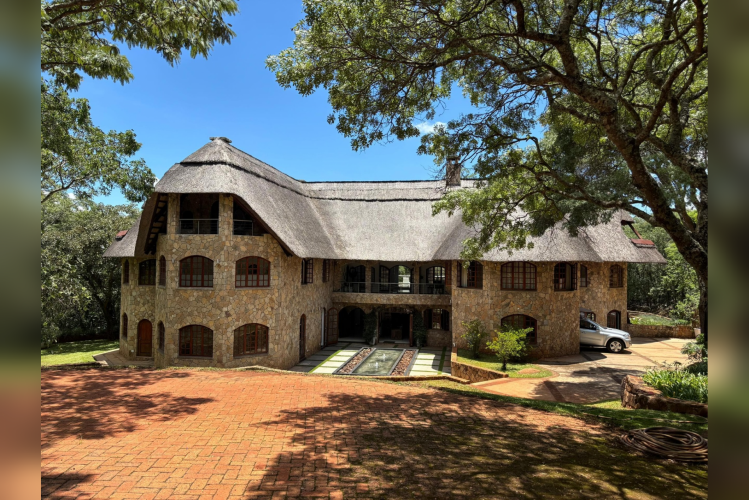
Belgium represents a natural starting point for us, particularly because of our personal connections with the country and our understanding of the local environment.
However, our ambition extends beyond Belgium. We see opportunities across several European markets, particularly in destinations where high-quality property management and personalized hospitality services are increasingly important.
One advantage we have today, compared with when we started in Thailand, is that we are no longer building a company from scratch.
We already understand the importance of operational procedures, financial transparency, communication systems, quality control, and structured management.
These principles are transferable, even when their practical implementation needs to be adapted locally.
At the same time, we want to develop partnerships with local professionals who understand their respective markets, particularly when it comes to regulations, real estate practices, and customer expectations.
Operating in an international destination like Koh Samui has also taught us to work with property owners and guests from many different nationalities, cultures, and backgrounds. That experience has made adaptability part of our identity.
Our objective is not to export a Thai business model to Europe. It is to build an international hospitality organization that combines shared professional standards with genuine local expertise.
And importantly, we intend to approach this expansion progressively. We have learned that sustainable growth is far more valuable than rapid expansion that compromises the quality of our services.
AC: As Siam-CS Management moves from a family-operated business toward a more internationally structured organization, how do you intend to preserve its original service philosophy while developing the leadership capabilities required for expansion?
LP: This is probably one of the most important challenges we face as an organization.
When you build a company with your family, there is a very personal relationship with the business.
You know your clients, you know your employees, and you feel directly responsible for almost everything that happens.
That personal involvement has always been part of Siam-CS’s identity, and I certainly do not want us to lose it as we grow.
However, there is a fundamental difference between personally delivering excellent service and building an organization capable of consistently delivering that same level of service without your direct involvement.
That is the transition we are currently making.
For me, the solution lies in developing strong leadership at every level of the organization.
We need managers who do not simply follow instructions, but who understand our philosophy, take ownership of their responsibilities, and have the confidence to make decisions.
This requires investment in recruitment, training, professional development, and internal communication.
It also requires me to evolve as a leader.
I have had to learn that delegating responsibility does not mean losing control. On the contrary, when you have the right people, clear objectives, and reliable reporting systems, delegation creates a much stronger organization.
Our leadership team, particularly Aqua and Conii, has played an essential role in this transformation.
Their involvement has allowed us to progressively establish more structured departments, clearer responsibilities, and a more professional management culture. But I am also convinced that procedures and organizational charts alone do not create a successful company.
Company culture is ultimately defined by the decisions people make when nobody is watching.
If our employees genuinely understand the importance of responsiveness, accountability, attention to detail, and respect for our clients, those principles will continue to guide their decisions regardless of where the company operates.
My ambition is to preserve the personal commitment of a family business while developing the professionalism, structure, and leadership capabilities of an international organization.
I do not believe those two objectives are contradictory. In fact, I believe combining them could become one of our greatest strengths.
AC: Looking ahead, what do you believe will define long-term success for Siam-CS Management as it develops its international presence, and what broader perspective would you offer on leadership in the luxury property management industry?
LP: I believe long-term success will be defined by our ability to grow without compromising the principles that made our development possible in the first place.
Of course, we have ambitions.
We want to expand internationally, develop new partnerships, integrate new technologies, and continue strengthening our position in the luxury property management industry.
But I have learned that growth, by itself, is not necessarily a measure of success.
You can manage hundreds of properties and still operate an inefficient organization. You can generate significant revenues while failing to create lasting value for your clients, employees, or business partners.
For me, genuine success is about building something sustainable.
An organization that property owners trust with their investments, that guests recognize for the quality of its hospitality, and that employees see as a place where they can develop professionally.
The industry itself is also becoming more demanding.
Property owners increasingly expect professional reporting, transparency, proactive maintenance, and genuine expertise in maximizing the long-term value of their assets.
Guests, meanwhile, expect the comfort, reliability, and attention to detail of luxury hotels, combined with the privacy and individuality of private residences.
Meeting both expectations requires considerably more than simply managing reservations and organizing cleaning services.
It requires a genuine understanding of hospitality, real estate, operations, finance, technology, and human relationships.
From a leadership perspective, my experience has taught me that resilience and persistence are essential, but they are not enough.
You also need the ability to question yourself, recognize your limitations, surround yourself with talented people, and accept that the organization must continuously evolve.
Perhaps the most important lesson I have learned is that the objective of a successful entrepreneur should not be to remain indispensable to the company, but to build a company capable of succeeding beyond their own involvement.
That is the direction we are taking with Siam-CS.
If, in ten years, we have developed a respected international organization, operating across multiple markets, maintaining consistent standards, and providing meaningful opportunities for the people who work with us, I will consider that a significant achievement.
And if we manage to preserve the same passion for hospitality that motivated us when we started with just four properties in Koh Samui, then I believe we will have succeeded in something even more important.
Loïcq Provenier’s perspective reflects more than a decade of entrepreneurial experience, from the challenges of building a small family-operated business in Koh Samui to the complexities of developing a professionally structured organization with international ambitions.
His leadership philosophy emphasizes resilience, continuous improvement, trust in talented collaborators, and the importance of aligning individual development with organizational success.
As Siam-CS Management prepares to extend its activities beyond Thailand, the company’s evolution illustrates the growing importance of professional management, technological innovation, and accountable leadership within the luxury hospitality sector.
For him, the ambition is clear: to build an internationally recognized hospitality organization that combines operational excellence, technological progress, and the personal attention that has defined Siam-CS Management since its beginnings.
Discover more about Siam-CS Management: http://www.siam-cs.com