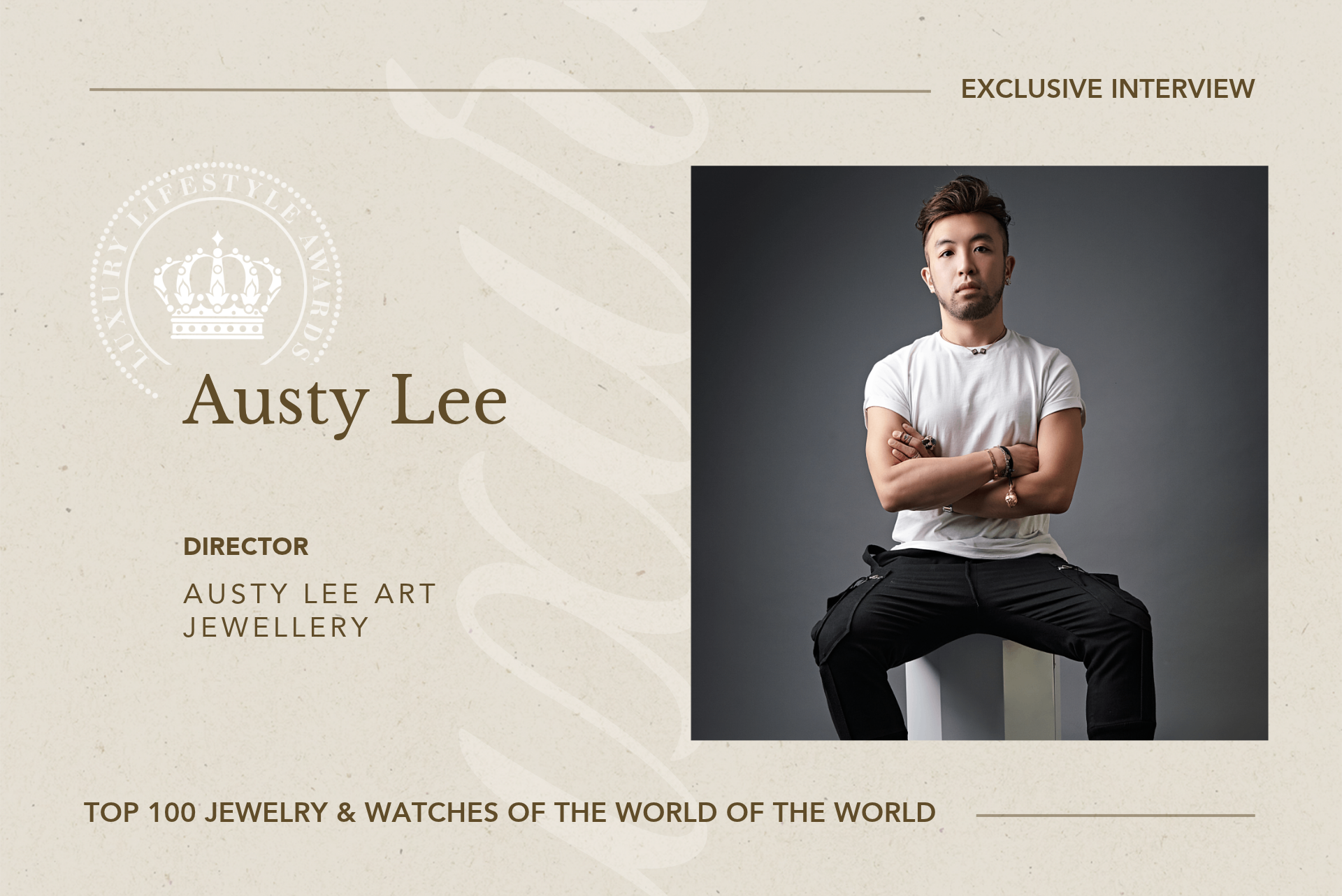
Austy Lee, Director of Austy Lee Art Jewellery, is a Hong Kong-based jewelry designer whose work brings together cultural symbolism, traditional craftsmanship, and contemporary artistic expression. Established in 2017, his eponymous brand explores the relationship between fine jewelry and wearable art through sculptural forms, rare gemstones, and distinctive material combinations. Recognized among the TOP 100 Jewelry & Watches of the World 2026 by Luxury Lifestyle Awards, the company represents an approach to jewelry design grounded in individual expression and technical knowledge. In conversation with Alexander Chetchikov, President of World Luxury Chamber of Commerce, Austy Lee discusses the development of his creative philosophy, the significance of cultural heritage, and the responsibilities of maintaining artistic identity within the contemporary luxury industry.
Alexander Chetchikov: Your career has developed across several areas of jewelry design, from traditional craftsmanship and gemstone sourcing to contemporary artistic expression. How have these experiences shaped your understanding of what defines a meaningful piece of high jewelry today?
Austy Lee: My experience across different disciplines, together with my personal interests, has profoundly shaped both my creative vision and my understanding of high jewelry. My fascination with religion, history, art, and cultural heritage has become an important source of inspiration, influencing the narratives and aesthetics behind my designs. By incorporating these elements into my work, I hope to introduce new perspectives and inspire a deeper appreciation for what jewelry can express beyond its material value.
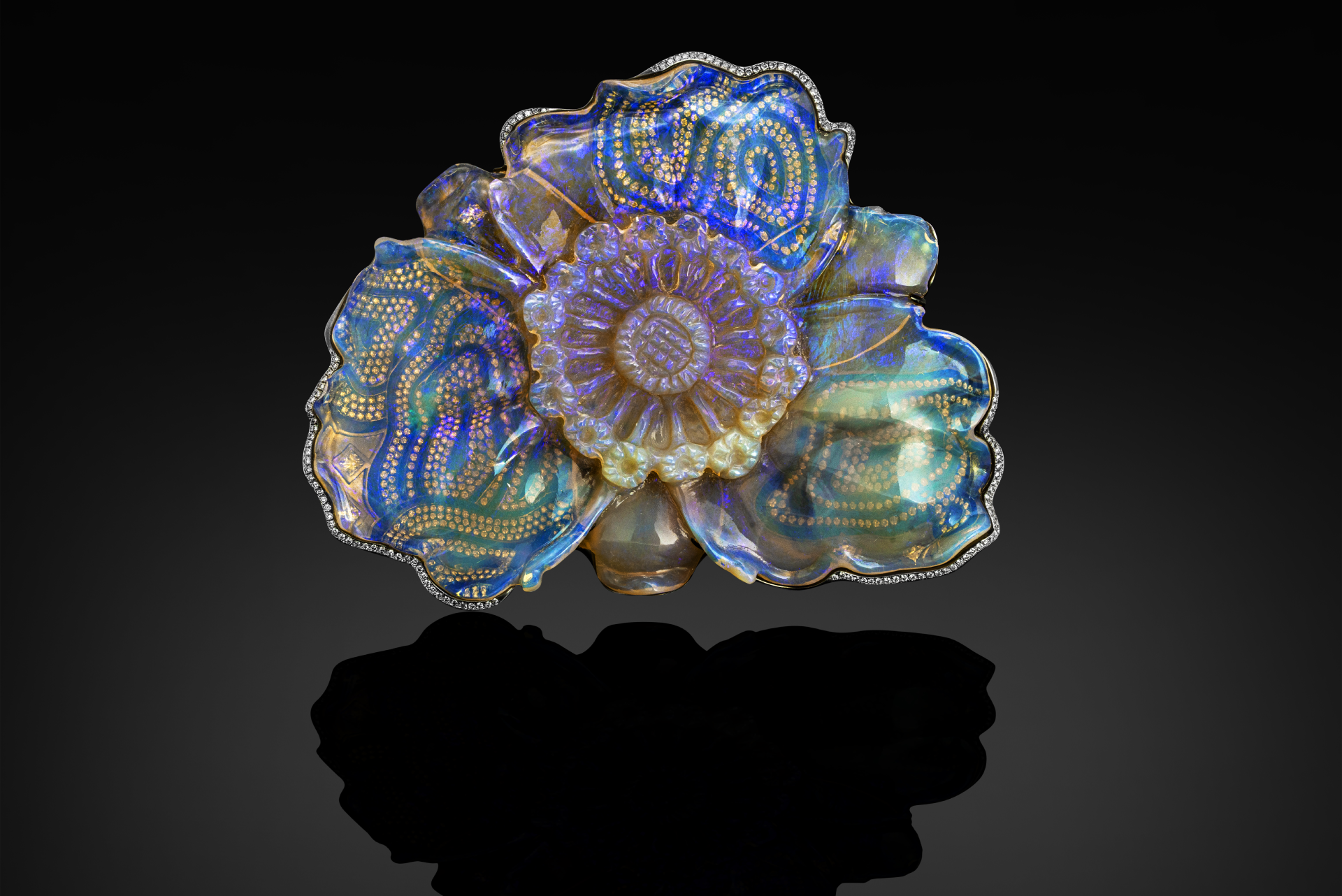
To me, a truly meaningful piece of high jewelry should possess a compelling story, innovative craftsmanship, distinctive forms, and an imaginative use of rare gemstones. The gemstones themselves are not merely precious materials; they are integral to the design concept and contribute to the overall narrative of the piece.
Above all, high jewelry should reflect the designer’s unique worldview and artistic language. Today, exceptional high jewelry is defined not only by rarity and technical excellence, but also by its ability to present a fresh vision through innovative techniques, unconventional gemstone applications, and a strong creative identity. In this sense, each piece becomes more than an ornament. It becomes a wearable work of art that embodies the designer’s perspective on culture, beauty, and the world.
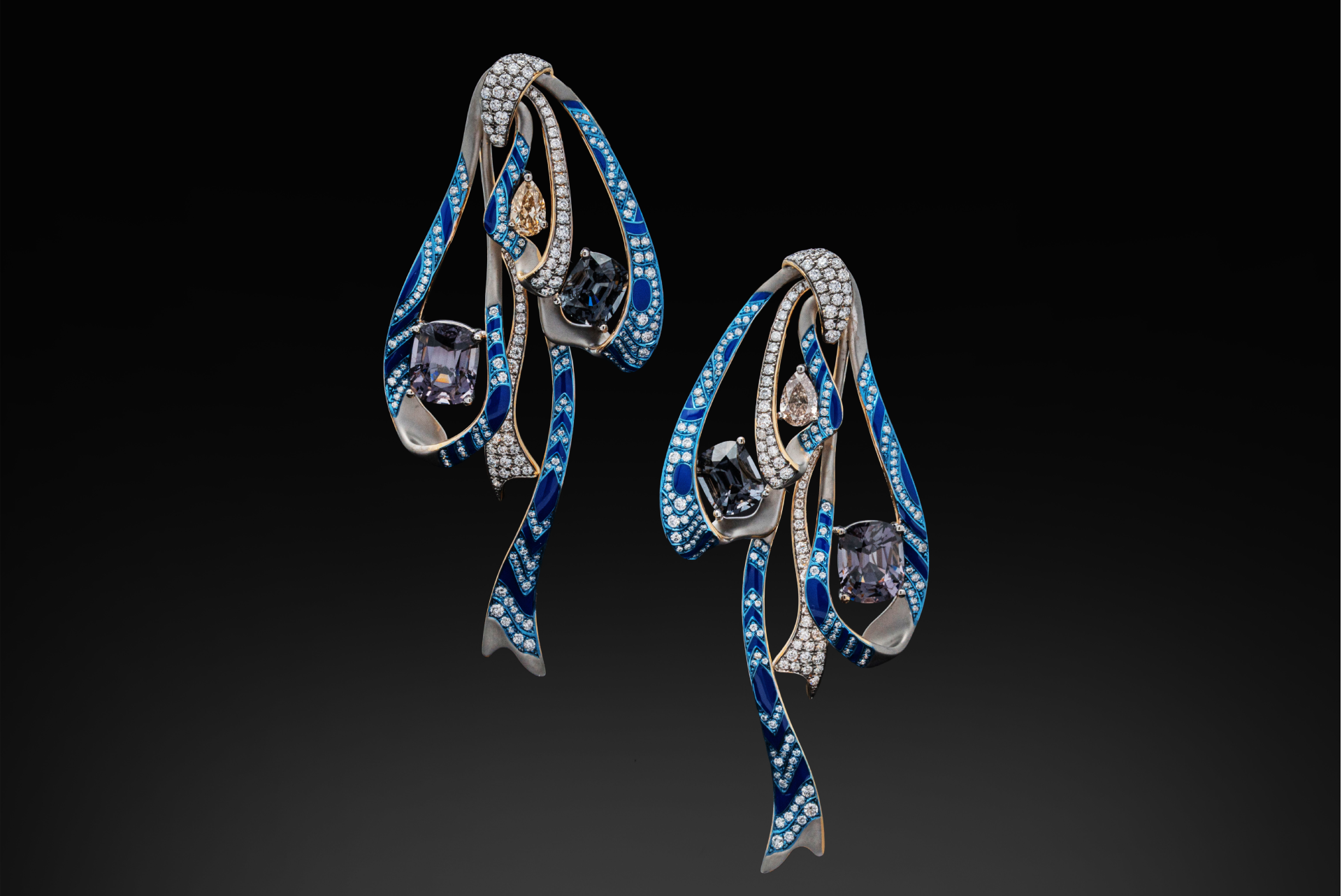
AC: Austy Lee Art Jewellery has developed a recognizable aesthetic that incorporates psychedelic art, historical references, and sculptural complexity. How do you maintain a consistent creative identity while continuing to explore new artistic directions?
AL: I believe a designer’s identity is shaped by their experiences, interests, and unique perspective on life. When I founded Austy Lee Art Jewellery, I incorporated many of the subjects that inspire me personally, from art and history to cultural narratives and everyday observations. A recognizable design language does not come from repeating the same forms, but from viewing the world through a distinct lens.
I often say that a line is never just a line. Its curve, angle, length, and proportion can completely alter the character of a design. Such nuances reflect a designer’s personal aesthetic and attention to detail, which ultimately define the individuality of their work.
While my creative identity remains constant, I continually seek new directions through research and exploration. I read extensively, study diverse subjects, and remain open to new interests and ideas. Originality and inspiration are not mutually exclusive; true innovation comes from transforming knowledge and references into something uniquely one’s own.
As a designer, I see my role as balancing creativity with practicality, innovation with craftsmanship, and artistic expression with wearability. That dynamic balance is what allows a brand to evolve while remaining true to its core identity.
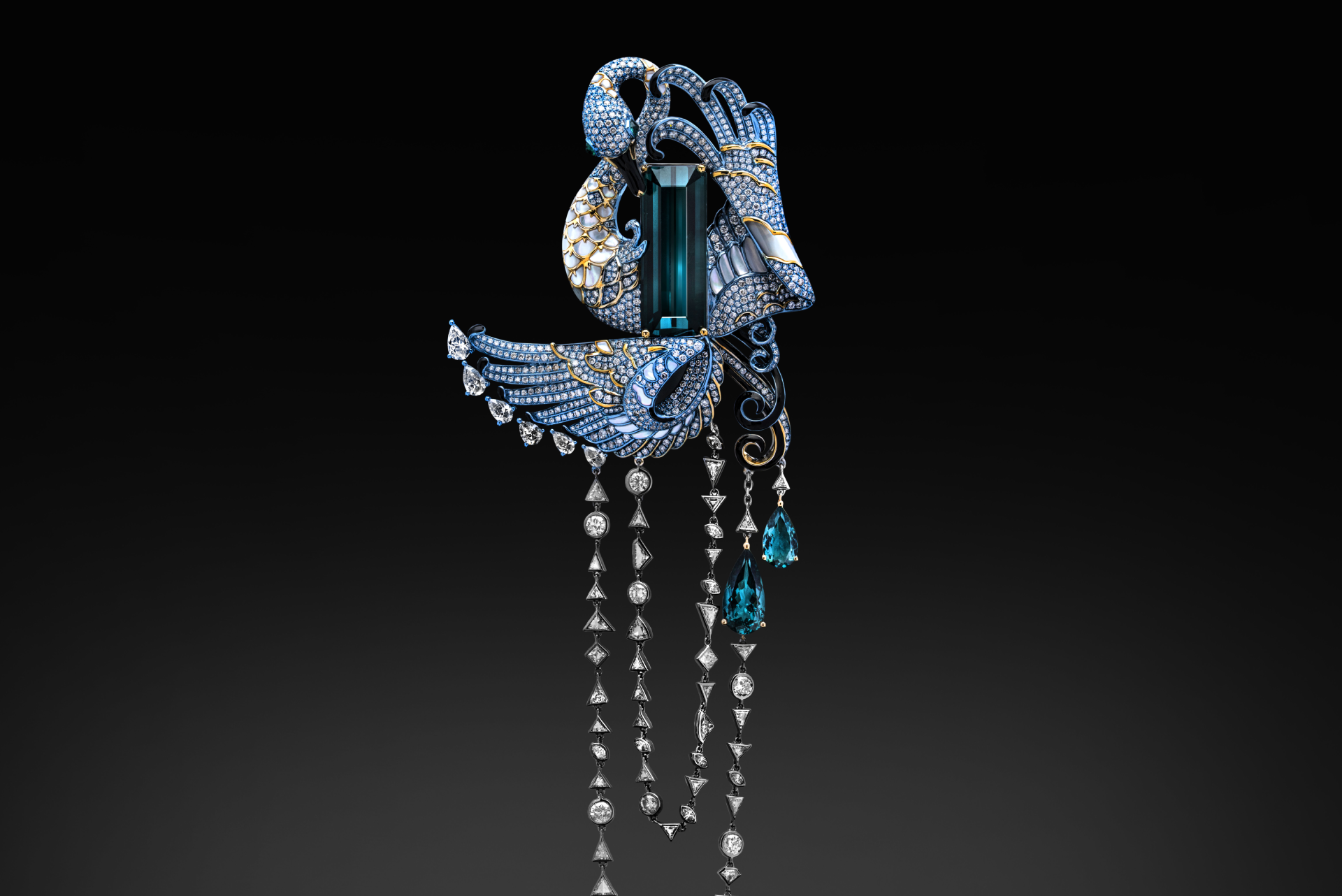
AC: Jade carries considerable historical and philosophical significance in Chinese culture, and it occupies an important place in your work. How do you approach the responsibility of interpreting traditional cultural symbols for a contemporary international audience?
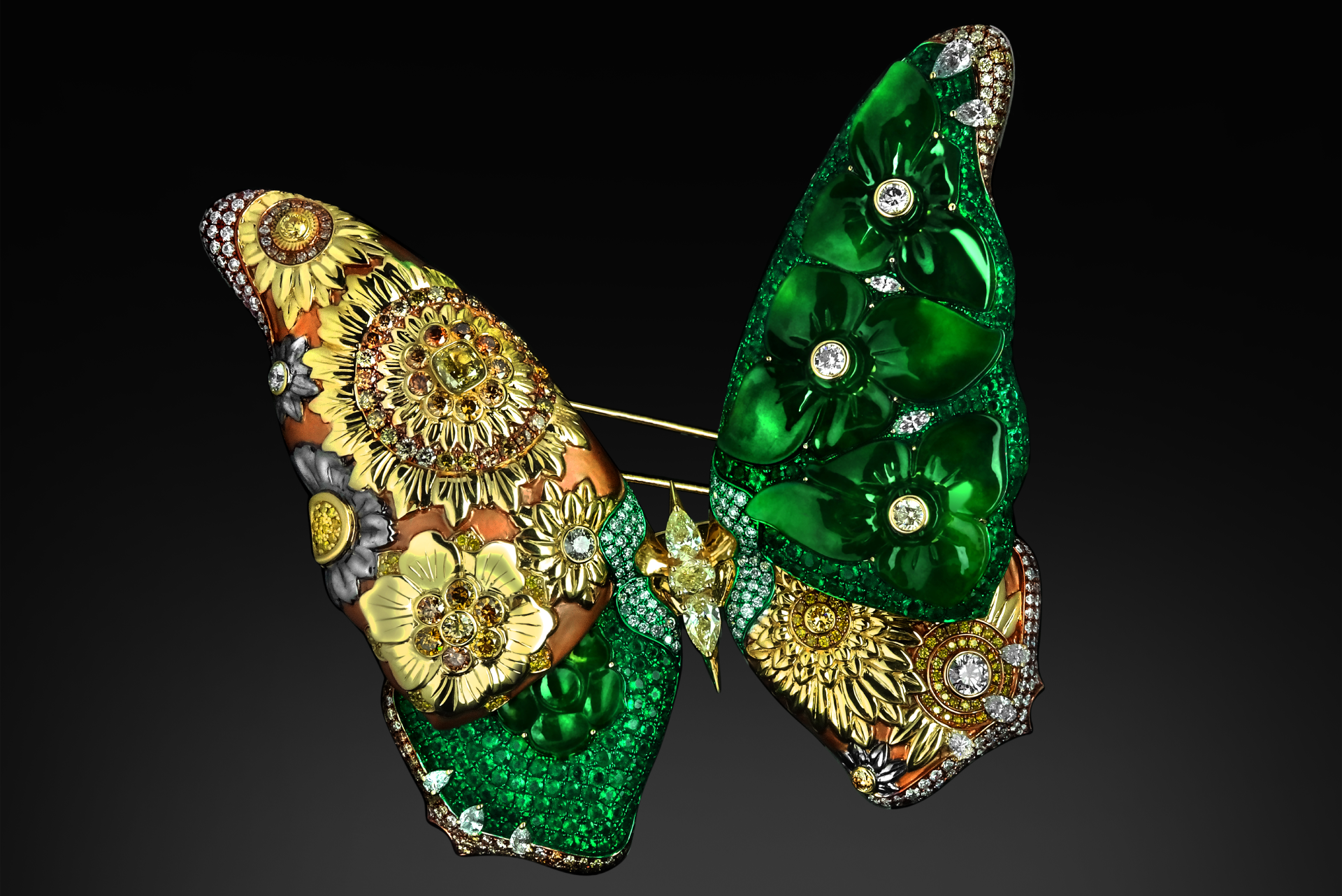
AL: Jade occupies a unique place in Chinese culture because it is not merely a material but a carrier of history, philosophy, and cultural identity. Throughout Chinese civilization, jade has been associated with moral virtue, spirituality, social rituals, and aesthetic ideals, giving it a significance that extends far beyond ornamentation.
As a Chinese designer, I believe it is important to study and understand these cultural layers rather than treating jade simply as a gemstone. A piece of jade can embody concepts such as integrity, refinement, and harmony, while also reflecting broader ideas about family, society, and philosophical thought.
When interpreting these traditions for an international audience, my goal is not to reproduce historical symbols literally, but to translate their essence into a contemporary visual language. This approach allows people from different cultural backgrounds to appreciate both the beauty of the material and the stories it carries.
Jade has long inspired international jewelry design, from the Art Deco creations of renowned houses such as Cartier to contemporary high jewelry today. By combining Chinese cultural narratives with modern design perspectives, I hope to create works that foster dialogue between cultures while presenting jade’s timeless relevance in a new and meaningful way.
AC: Your collections frequently combine rare gemstones, intricate metalwork, and unconventional materials. From a leadership perspective, how do you balance artistic experimentation with the technical discipline and standards expected in high jewelry?
AL: My approach to design has always been rooted in both research and experimentation. I spend a great deal of time studying historical jewelry, decorative arts, and manufacturing techniques from different cultures and periods. My interests extend beyond jewelry itself, from ancient lacquer craftsmanship to modern industrial production methods and advanced materials engineering. These diverse references often inspire me to explore new materials, technologies, and fabrication techniques within my own work, allowing the brand to maintain a spirit of innovation while remaining grounded in craftsmanship.
That said, creativity should never be mistaken for spontaneity. Design is an immensely disciplined practice. Behind every new idea lies extensive research, testing, prototyping, and refinement. True innovation requires patience, technical understanding, and a willingness to continually learn and experiment.
From a leadership perspective, balancing artistic experimentation with the standards of high jewelry ultimately comes down to commitment and discipline. Craftsmanship, quality control, and technical excellence are not separate from creativity; they are the foundation that allows creativity to flourish. No matter how ambitious or unconventional a concept may be, it must meet the highest standards of construction, wearability, durability, and execution.
I also believe that maintaining a distinct creative voice requires constant intellectual curiosity. As a designer, I am always reading, researching, and exploring subjects beyond jewelry. The more knowledge one acquires, the broader the possibilities for storytelling and innovation become. This ongoing process helps ensure that each collection remains fresh and original while avoiding repetition.
Ultimately, a designer’s role is to navigate a delicate balance: between innovation and practicality, artistic expression and commercial viability, imagination and technical feasibility. The goal is not simply to create objects that are visually striking, but to create pieces that succeed simultaneously as works of art, examples of exceptional craftsmanship, and products of enduring quality. I believe that balance is what defines a truly successful high jewelry brand today.
AC: You have expressed the belief that meaningful jewelry should not be defined exclusively by social status or privilege. How does this philosophy influence your understanding of luxury and the long-term relationship between a jewelry brand and its clients?
AL: I believe luxury should not be defined solely by rarity, wealth, or social status. While exceptional gemstones and exclusivity certainly have their place, true luxury is, above all, the highest expression of artistry, craftsmanship, and human creativity.
I believe luxury should not be defined solely by rarity, wealth, or social status. While exceptional gemstones and exclusivity certainly have their place, true luxury is, above all, the highest expression of artistry, craftsmanship, and human creativity.
For me, luxury is created when designers and artisans devote extraordinary amounts of knowledge, time, skill, and passion to a work. It is not simply the value of the material that matters, but the vision behind it, the quality of its execution, and its ability to express something meaningful about culture, beauty, or the era in which it was created.
This philosophy also shapes my relationship with clients. I have always been drawn to unconventional ideas and often create pieces based on highly personal interests and perspectives. Initially, I assumed these unusual concepts would appeal only to a niche audience. Surprisingly, many collectors are attracted to my work precisely because of its originality and distinctive character.
I enjoy asking clients what resonates with them about my designs, and those conversations often reveal a shared appreciation for individuality and creativity. In return, I share the stories and inspirations behind the pieces. Over time, this creates a unique relationship in which clients come to understand the designer, while I gain a deeper understanding of the people who connect with my work. Many clients have even become close friends.
Ultimately, luxury is not just about possessing something rare. It is about connecting with a unique artistic vision, exceptional craftsmanship, and a shared pursuit of beauty. I believe these authentic connections, between designer, object, and collector, are what give luxury its most meaningful and enduring value.
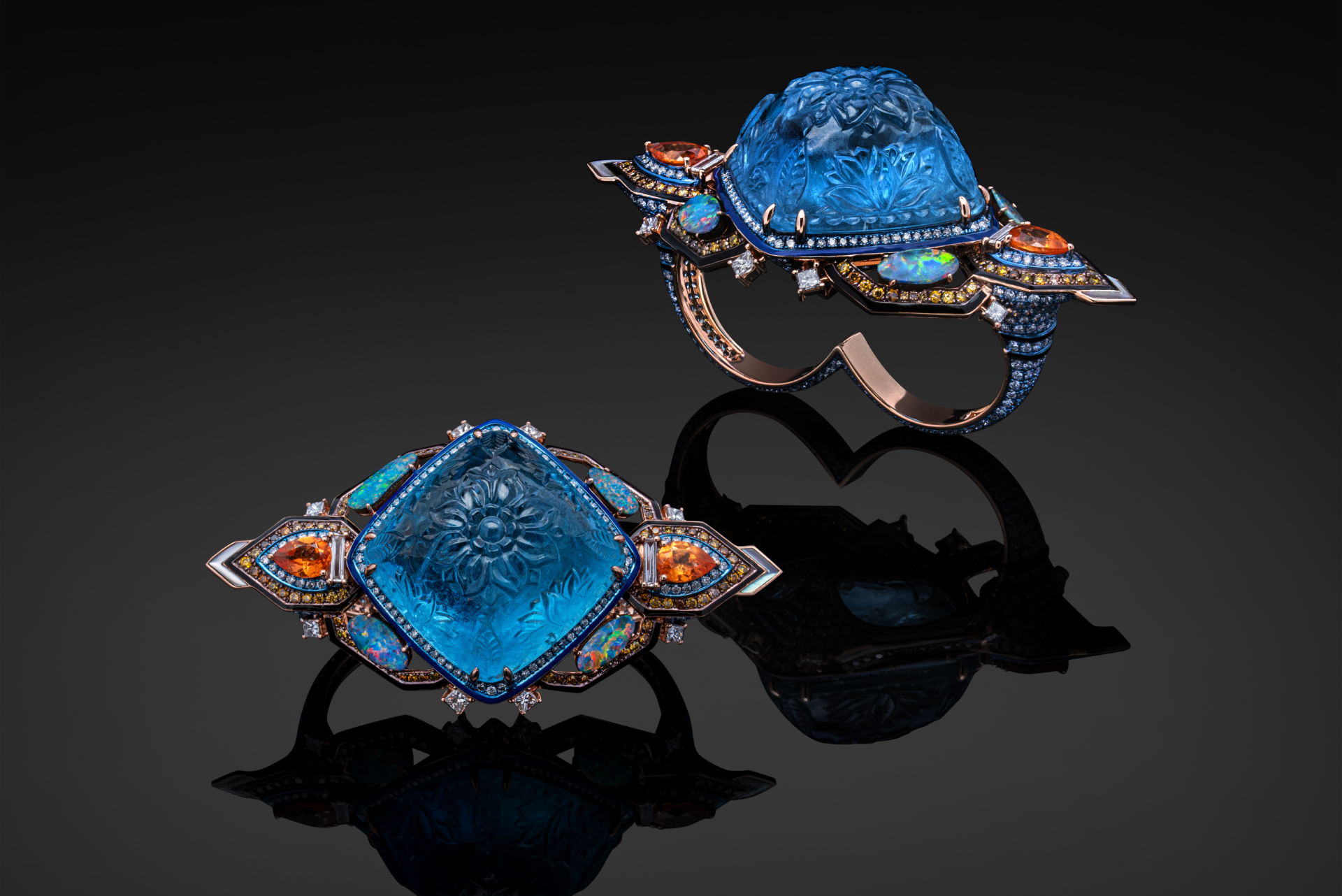
AC: As the jewelry industry continues to evolve, how do you see the relationship between cultural authenticity, individual design identity, and the expectations of an increasingly international luxury audience?
AL: I believe cultural authenticity and individual identity are more important than ever in today’s global luxury market. One of the most unconventional things I have done is openly share my designs and creative process online. To me, this is not only about promoting jewelry, but also about preserving and passing on knowledge, craftsmanship, and cultural values.
While social media has made high jewelry more accessible, I believe designers must look beyond trends and algorithms. I always encourage my students to study history, read books, and learn from traditional techniques and cultural heritage. When historical knowledge is combined with contemporary ideas, a truly personal design language can emerge.
Ultimately, international clients are seeking more than luxury alone. They are looking for authenticity, originality, and excellence. If a designer develops a distinctive voice, respects cultural heritage, and pursues the highest standards of craftsmanship, clients will naturally be drawn to that work. In my experience, when you create something truly unique and meaningful, people will find you, wherever they are in the world.
AC: Austy Lee Art Jewellery has been recognized among the TOP 100 Jewelry & Watches of the World for 2026. Looking beyond this recognition, what principles will guide your leadership and the continued development of the brand in the years ahead?
AL: Being recognized among the TOP 100 Jewelry & Watches of the World is a great honor, but my focus remains the same: to keep innovating and creating work that expands the possibilities of jewelry design.
I also hope to see more young designers bring fresh ideas and perspectives into the industry. Innovation should not be a niche pursuit; it should help shape how each generation understands beauty, culture, and creativity.
Looking ahead, I want Austy Lee Art Jewellery to continue challenging conventions while staying committed to originality, craftsmanship, and cultural dialogue. If we can inspire new ways of thinking about jewelry, then I believe we are moving in the right direction.
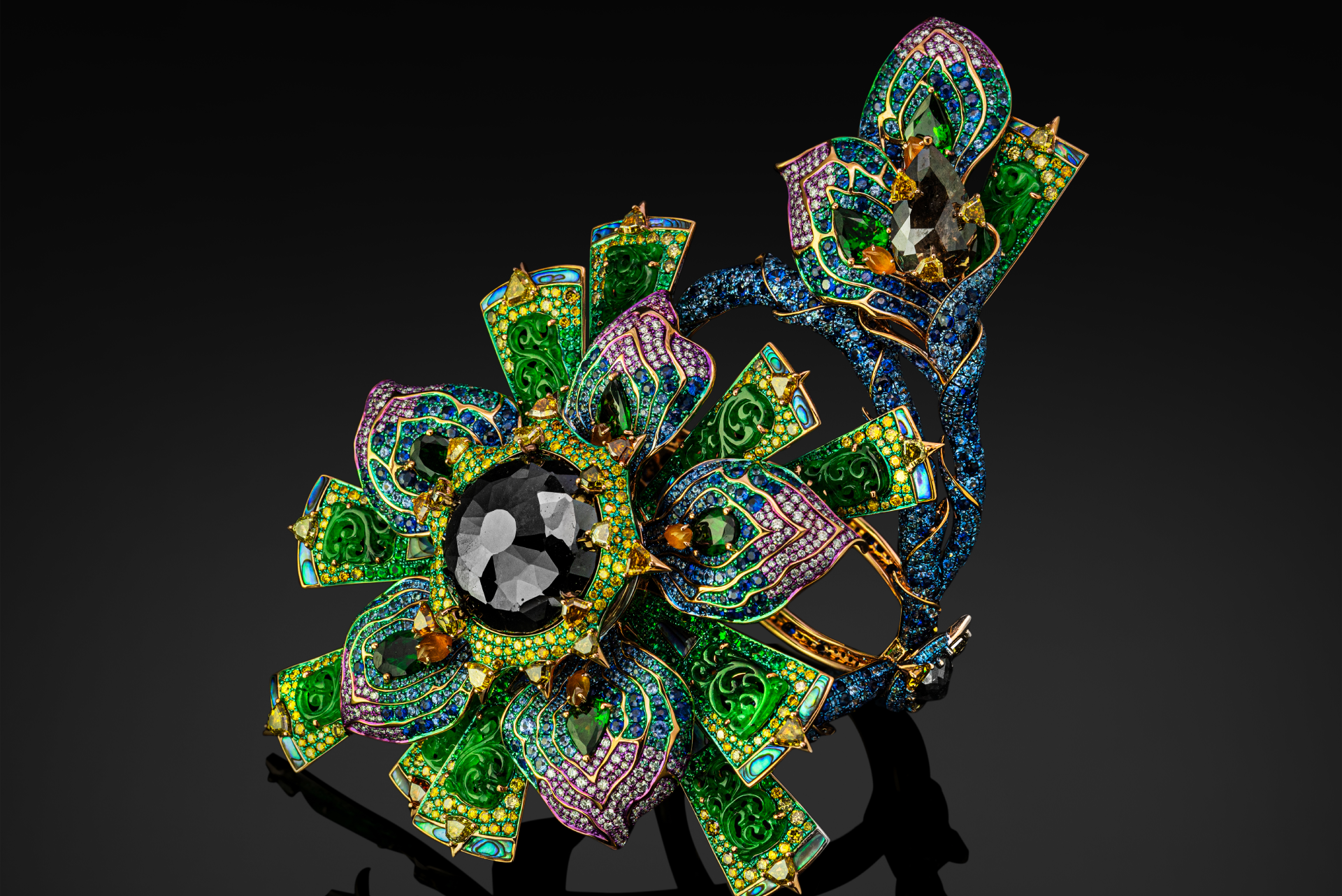
Austy Lee’s approach to jewelry design reflects a leadership perspective in which cultural understanding, technical discipline, and artistic independence remain closely connected. His experience across design, production, gemstone sourcing, and education informs a practice that considers jewelry both a contemporary creative medium and a carrier of cultural knowledge. As Austy Lee Art Jewellery enters its next stage following its 2026 TOP 100 recognition, the conversation highlights broader questions facing the jewelry industry: how to preserve specialized craftsmanship, interpret heritage responsibly, and maintain a distinct creative identity within an international luxury landscape.
Discover more about Austy Lee Art Jewellery: https://www.austyleeartjewellery.com/home